

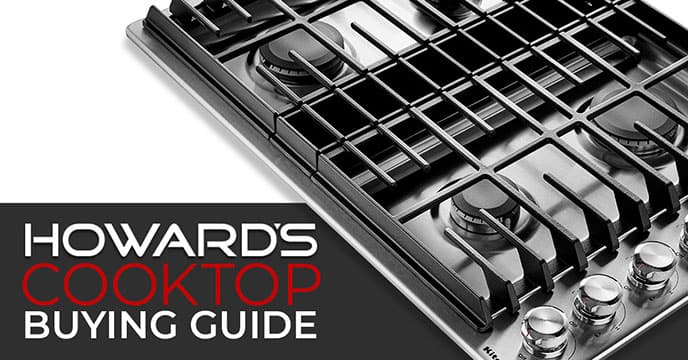
Whether you're a pro chef or just a master meal maker in your kid’s eyes, a good cooktop can make all the difference at dinnertime.
Not only is a cooktop the perfect aesthetic complement to your kitchen — and a way to seamlessly blend function into every style of décor — it can make cooking much more intuitive. If you’re thinking about ditching your old range in favor of a sleek, new built-in cooktop, check out this ultimate guide to cooktop shopping, assembled by our team of experts here at Howard’s.
Price

The price of your cooktop is going to depend on what type you’re looking for. Even the simplest electric cooktops don’t go much lower than $500, but you can find some basic gas cooktops for under $400. Gas cooktops max out at around $4,500, but high-end electric or induction cooktops can run up to $6,500. So, before you get too excited about the latest induction tech, be sure to have a budget in mind when you start to shop. If you’re not sure yet which type of cooktop will suit you best, read up on your options.
Type

The type of cooktop you get can completely shape your cooking experience. Each type has its own unique benefits, and deciding which one will work best for you all depends on your preference and your household’s cooking habits. Here’s a quick rundown of the three major cooktop options available.
-
Electric
Standard electric cooktops are a happy medium between gas and induction. They often have varied burner sizes to accommodate different types of pots and pans, and they have a futuristic look that’s stylish in any kitchen. There are two main types of electric cooktops: coil-style and radiant, also called smoothtop. They both have the benefits of the even heating and ease of use that makes electric cooktops a favorite, but smoothtops tend to be a bit sleeker-looking and easier to clean.
-
Gas
Gas-powered cooktops are the most common type and tend to fall on the less-expensive side of the price spectrum, though there are plenty of pro-quality gas cooktops on the market as well. Some professional chefs actually prefer gas to more high-tech electric or induction cooktops, because the flame turns on immediately and it allows for more precise heating. The fact that burners heat up immediately and don’t require electricity to work is a big plus. Gas cooktops are energy efficient too, although they can be more difficult to clean and don’t always come with all the latest features.
-
Induction
The highest of the high-end, induction cooktops are the latest in kitchen technology. The burners are powered by magnets, and they generate heat directly in the pan. These cooktops are much safer to use, because the burners won’t heat until you’ve placed an induction-ready pot on top, so the likelihood of accidental burns on an unattended stovetop is much lower. Induction technology also heats up pans at lightning speed, and these cooktops have been noted to boil water in half the time of gas or electric! You can only use special, induction-ready cookware on these cooktops, but as induction has become more popular, more and more companies are designing their pots and pans to be induction-compatible.
Size
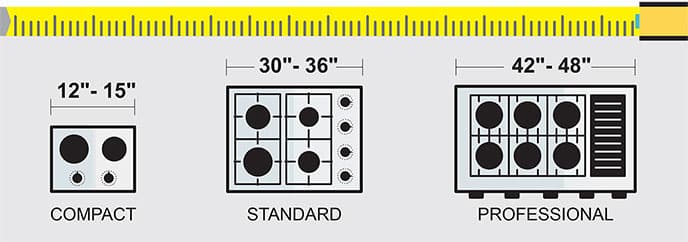
Measure your space before you start to shop. Of course, you want a cooktop that gives you plenty of space to make meals, but that shouldn’t come at the expense of prep space and countertops. Cooktops typically come in 30”, 36”, 42”, and 48” varieties, though 30” and 36” are the most common for home use. If your space really doesn’t allow for anything that large, but you still want the ease and convenience of a standalone cooktop, you might want to consider a smaller 12” or 15” model with just one or two heating elements.
Heating Elements

Electric and induction cooktops usually max out at around 5 heating elements, while some high-end gas stoves can offer as many 6 burners on a single stovetop, plus a built-in griddle! Now, models that big are more commonly found in restaurants than home kitchens, and you won’t necessarily be able to cook on all those burners at once (unless you sprout a few extra arms), but the extra space to let things simmer or introduce a second chef into the mix can be a big help if you do major league cooking at home. For most cooks though, four heating elements are more than enough to make everything you need. The number of burners you’ll want for your new cooktop all depends on how much cooking you do, and how much you want to max out your cooking space.
Features
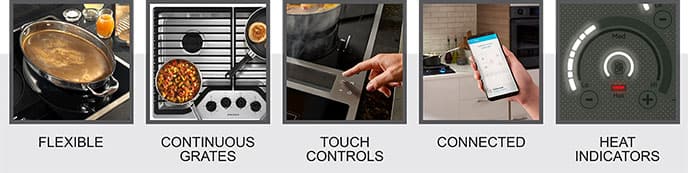
Cooktops might not have as many fancy functions as other smart-home appliances, but there are still plenty of special extras to invest in if you’re determined to have the best of the best in your kitchen. Check out these popular cooktop features and decide which ones are must-haves in your kitchen.
-
Flexible Elements
Flexibility is king in the world of cooktops. There’s no greater convenience than the ability to adapt your cooktop to your needs, rather than being held back by burner sizes, shapes, and arrangements that don’t quite suit you. Lots of electric and induction cooktops include flexible heating elements that can change size depending on the size of the pot, or even separate burners that can merge into one for large pans and trays.
-
Continuous Grates
The continuous grate is the gas cooktop version of a flexible heating element. Cooktops with this feature are designed so that the grates are one single, even piece of metal. This allows you to easily slide a pot from one burner to another without missing a beat. This intuitive design allows for better ease of movement, reduces the likelihood of spills, and helps food get a more precise heat.
-
Touch Controls
Say goodbye to cumbersome knobs and bulky buttons: the latest cooktops are switching over to touch controls. Touch controls give your kitchen a sleek, streamlined look, and they make cleanup time much easier – no more sauces splashed into unreachable nooks and crannies. It also allows for better temperature control, as some touch-systems forego the traditional low-medium-high settings and let you set your burner temperature to the exact degree.
-
Smart Connectivity
Smart cooktops can actually sync up with other devices in your kitchen using Bluetooth or Wi-Fi to make your cooking simpler and safer. Some models can connect to a vent hood, which automatically turns on once the burners are ignited. Others let you monitor heat levels of each burner right from your smartphone. These smart controls are designed to help you carefully control everything about your cooking experience.
-
Heat Indicators
Stay safer in the kitchen with heat indicators that let you know when burners are hot, even after you’ve turned them off. Especially with electric cooktops, it’s easy to forget that those burners were on just moments ago and might still be hot enough to burn you (or the food in your pan). Heat indicator lights, either on the burners themselves or on the control panel, help avoid singed fingers and overcooked food by letting you know when part of your cooktop is still hot to the touch.
Quick Picks
If you’re still struggling to decide exactly what you need in a new cooktop, we’ve picked out a few of our favorite items from our store here at Howard’s. Think about what size, features, and functions you’re looking for in a new cooktop, and you’re sure to find a model that suits all your needs.
-
Pro Chefs
THERMADOR CIT36XKBB
This Thermador cooktop is a revolution in cooking technology and it’s perfectly suited to culinary pros looking to step up their home kitchen. The Freedom induction cooktop is a burner-free cooking surface that lets you arrange up to four pots of any size anywhere on the cooktop. It allows for total flexibility and control, and even has a full-color touchscreen to program cook settings for each individual pan. No pro kitchen is complete without the complete freedom this Thermador offers!
- Shoppers on a Budget
GE JGP3030SLSS
For a cooktop that gets the job done right—at the right price—this gas-powered GE is a great choice. It has four heating elements, easy-to-use controls, and a high-powered burner for fast boiling, making it a great bang for your buck at under $700. It doesn’t have all the fancy extras like touch control and flex-burners, but it’s durable, efficient, and affordable, and made by a great brand too.
- Cooking with Gas
THERMADOR SGSX365FS
If you’re looking for a great gas stovetop, Thermador is the way to go. Thermador is known for top-of-the-line kitchen appliances, and its new star-shaped burners are the latest and greatest in gas cooking tech. This particular model boasts tons of flexibility and temperature control, and the five-pointed burners maintain even heat on every single pot and pan, no matter the size. This Thermador’s precision heating and sleek, intuitive design put it over the top compared to other gas cooktops on the market.
- Interested in Induction
SAMSUNG NZ36K7880UG
If you’re always up on the latest home appliance tech, you’ll love this Samsung smart induction cooktop. With incredible heating performance and lots of features (like LED lighting on the heating elements and Wi-Fi connectivity) that make cooking exciting and easy, it’s a great pick for any household. It also has a flexible cooking zone that can be used as two separate burners or one larger heating element for large pots and pans, so you’ll never be short on space.
- All About Electric
GE PROFILE PP9036SJSS
This GE is an incredible, high-powered smoothtop perfect for throwing together quick meals or managing massive holiday dinners. It has five burners and intuitive touch controls, so you can cook your way, no matter what’s on the menu. It even has flexible burners and a tri-ring heating element, which can make the heated surface area larger or smaller depending on the size of the pot being used. Each burner is synced up to its own timer, so nothing gets overcooked, and a built-in child lock helps protect curious hands trying to help out in the kitchen.